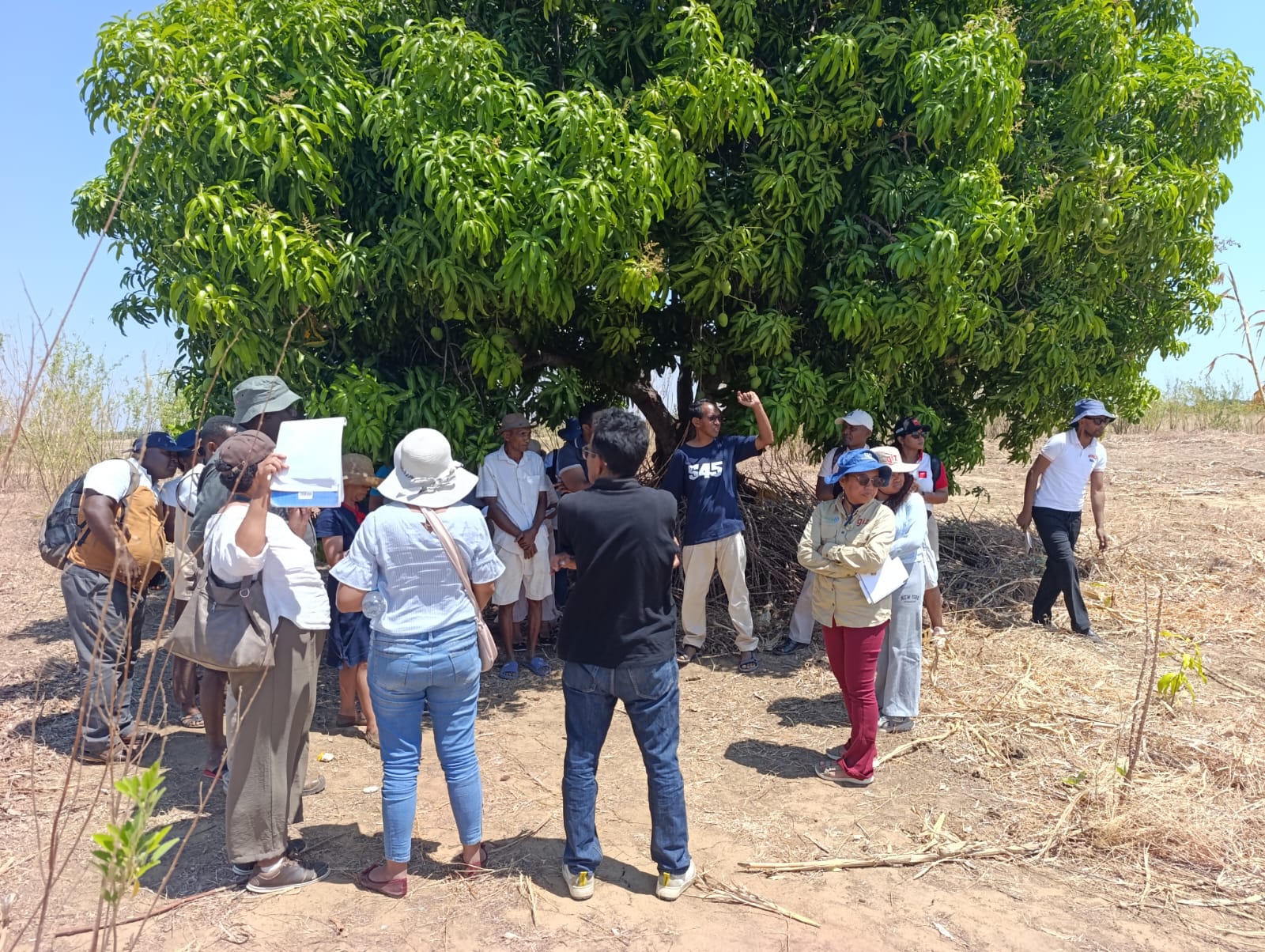
MAHAJANGA, Madagascar, 30 September 2026 – Three forage crops growing in Mandrosoa 12km and a 175-hectare community grazing area in Manarenja became open-air classrooms as government officials and technical partners explored how Herding for Health could strengthen livestock production and restore Madagascar’s rangelands.
The field visits, conducted on 28 September 2026, opened a three-day training workshop on Sustainable Rangeland Management and the Herding for Health approach in the Boeny Region.
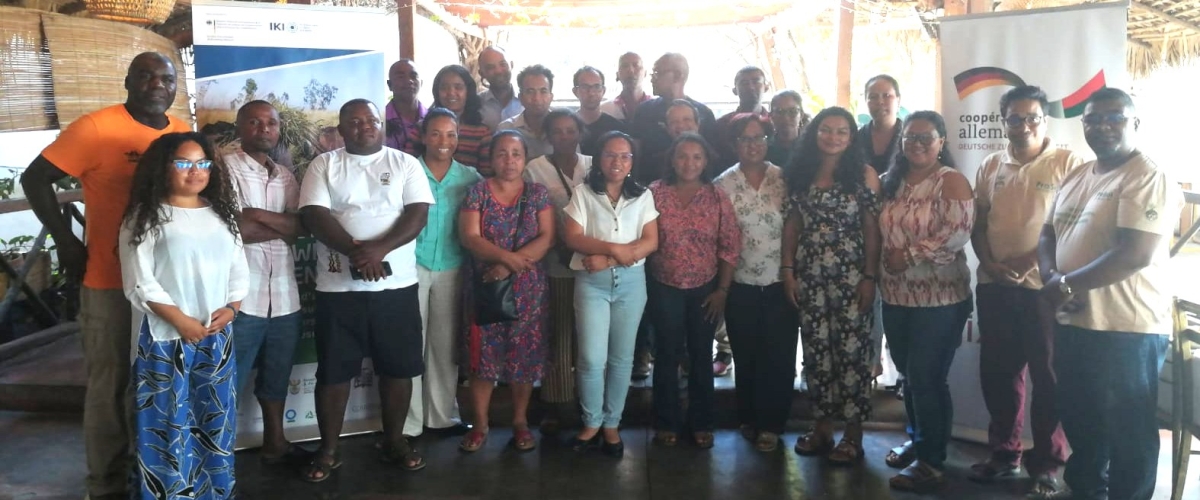
Organised by GIZ through the IKI Growing Greener project, in collaboration with the Centre for Coordination of Agricultural Research and Development for Southern Africa, Peace Parks Foundation and Conservation International, the training brought together representatives of Madagascar’s Ministry of Livestock, regional technical services, research institutions, development projects and community grazing-management committees.
At Mandrosoa 12KM, participants examined plots of Brachiaria, Juncao and Panicum. The three introduced forage varieties prompted practical discussions about a challenge familiar to livestock keepers across Madagascar: maintaining an adequate supply of nutritious feed, particularly during dry periods.
Participants considered how the forages were adapting to local conditions, their potential to improve livestock nutrition and the practical requirements for establishing and managing forage plots. The discussions also highlighted the importance of preserving fodder for periods when natural grazing becomes scarce.
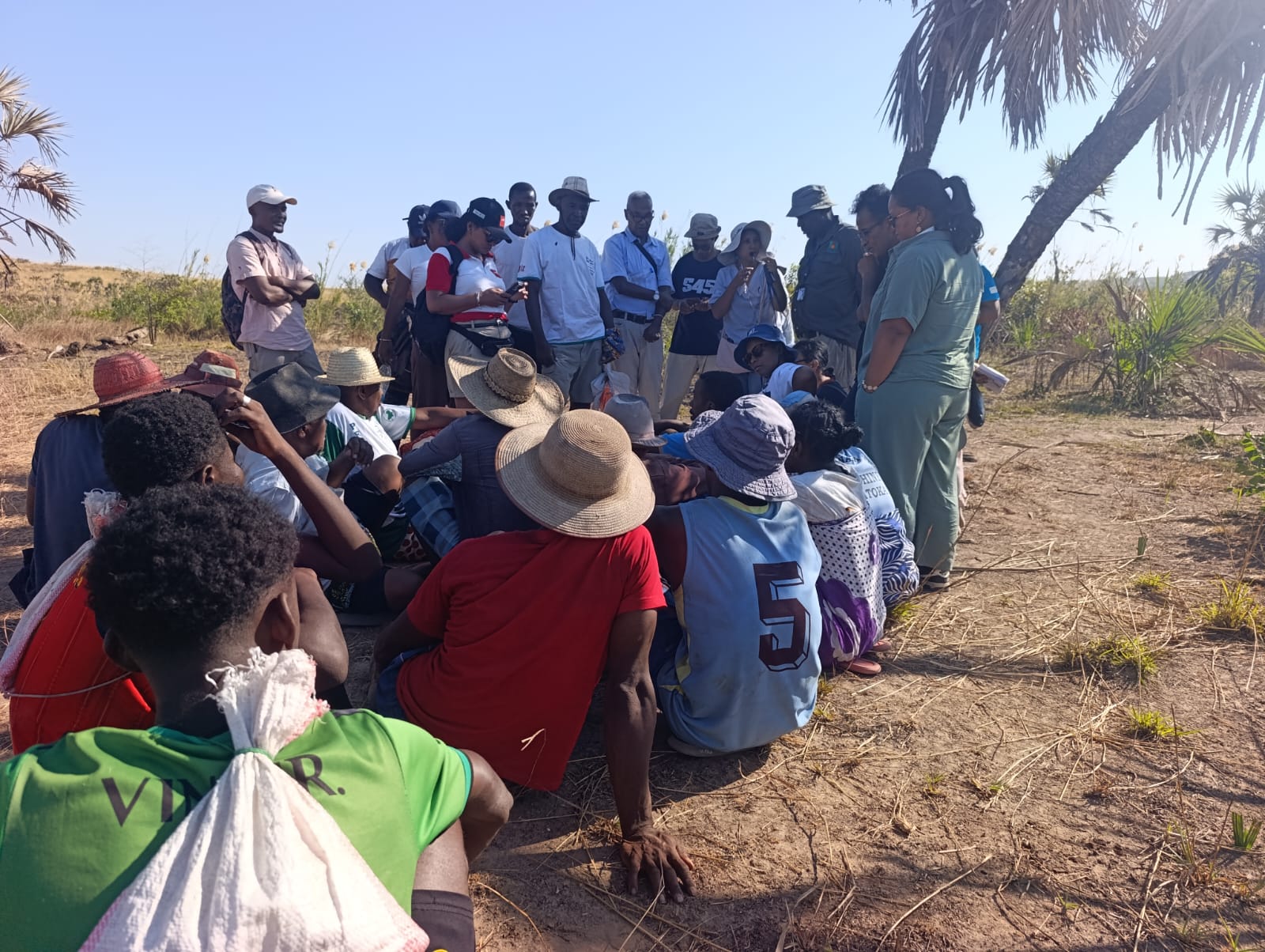
The visit then moved to Manarenja, where a local committee manages a 175-hectare community grazing area. Here, attention shifted from individual forage plants to the more complex question of how people collectively manage shared land.
Participants discussed grazing arrangements, the responsibilities of the management committee, sustainable use of pasture resources and the importance of land-tenure security. The experience demonstrated that restoring rangelands is not only a technical matter. It also requires strong community institutions, clearly understood responsibilities and confidence that communities will continue to benefit from the land they manage.
The field visits gave participants an opportunity to observe what already exists before considering what Herding for Health could add. Madagascar has accumulated valuable experience in community-based rangeland management, including the restoration of more than 15,800 hectares of pastureland in the country’s north-west through the former GIZ-supported ProSoil project.
Rather than introducing Herding for Health as a stand-alone or externally imposed model, the workshop examined how it could build on these achievements and be adapted to Madagascar’s social, institutional and environmental realities.
During the technical sessions in Mahajanga, Dr Edmore Masaire of Peace Parks Foundation presented Herding for Health as a community-driven approach that connects livestock productivity, ecosystem restoration and collective governance.
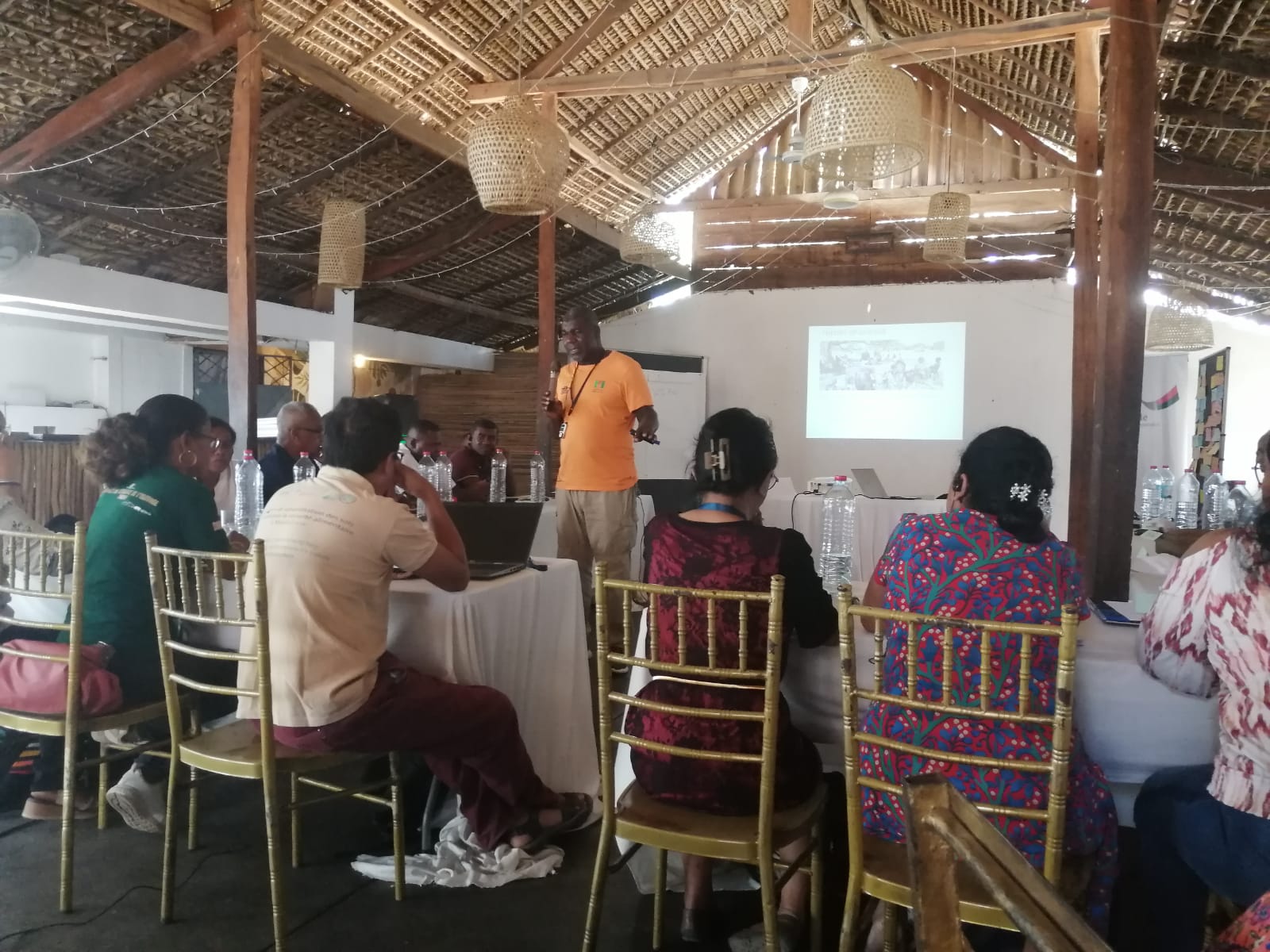
The approach replaces unmanaged, continuous livestock movement with planned grazing and organised herd management. By guiding where animals graze and allowing used areas sufficient time to recover, communities can improve the condition of their livestock while helping degraded vegetation and soils recover.
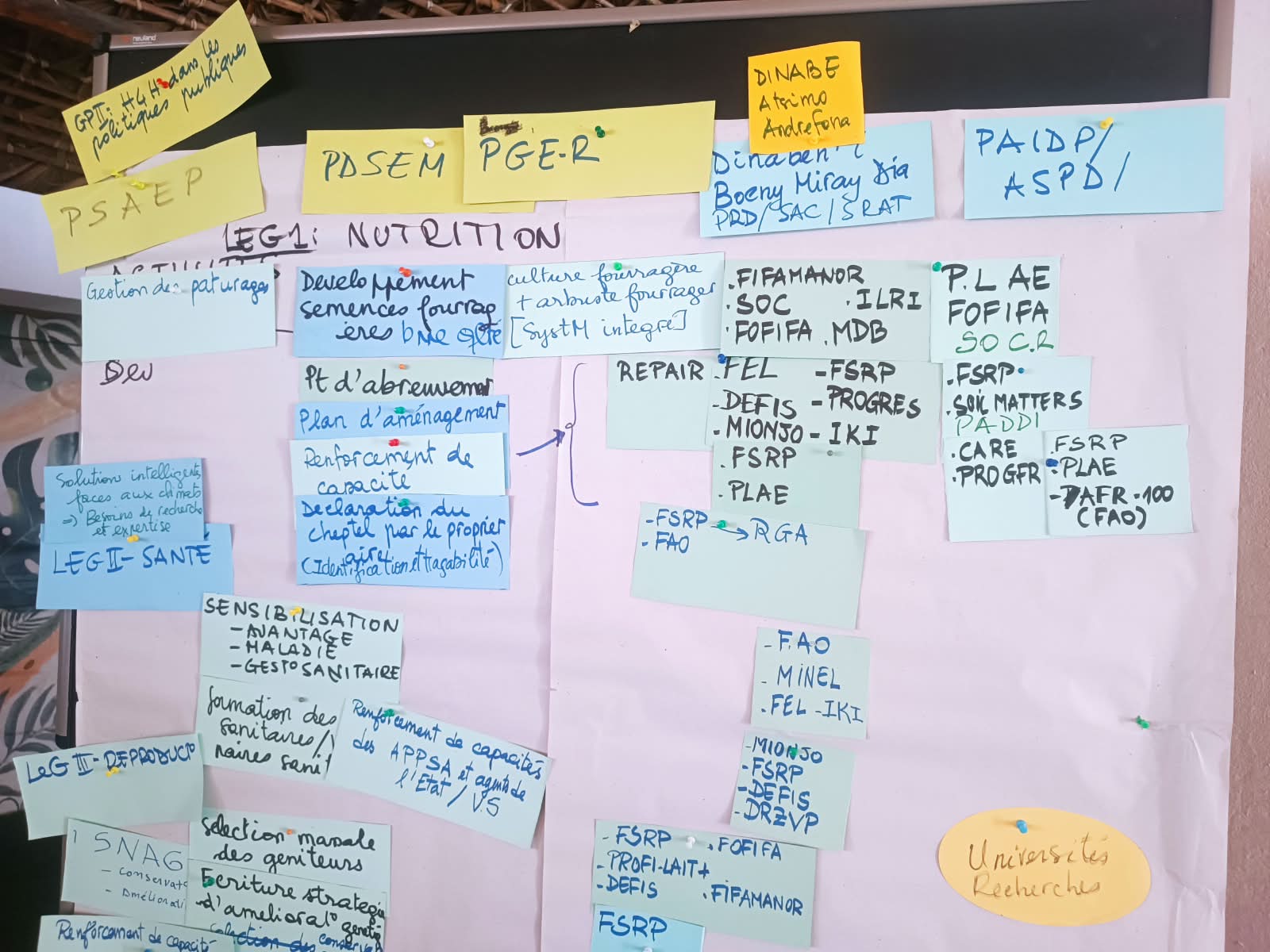
Participants explored the “four legs of the cow”: nutrition, reproduction, animal health, and management and market access. The framework illustrates that livestock production cannot improve sustainably when one of these interconnected areas is neglected.
The training also addressed fire management, restoration of degraded pastures, livestock performance, biosecurity and herd security. These issues are particularly relevant in Madagascar, where livestock keepers face feed and water shortages, uncontrolled animal movement, animal diseases, cattle theft, weak market access and increasingly severe climate pressures.
Madagascar has approximately 34 million hectares of pastureland, yet pasture and bushfires affect millions of hectares annually. The country has also committed to restoring four million hectares of degraded land and forests by 2030. These realities make sustainable grazing management an important part of the country’s wider restoration and climate-resilience agenda.
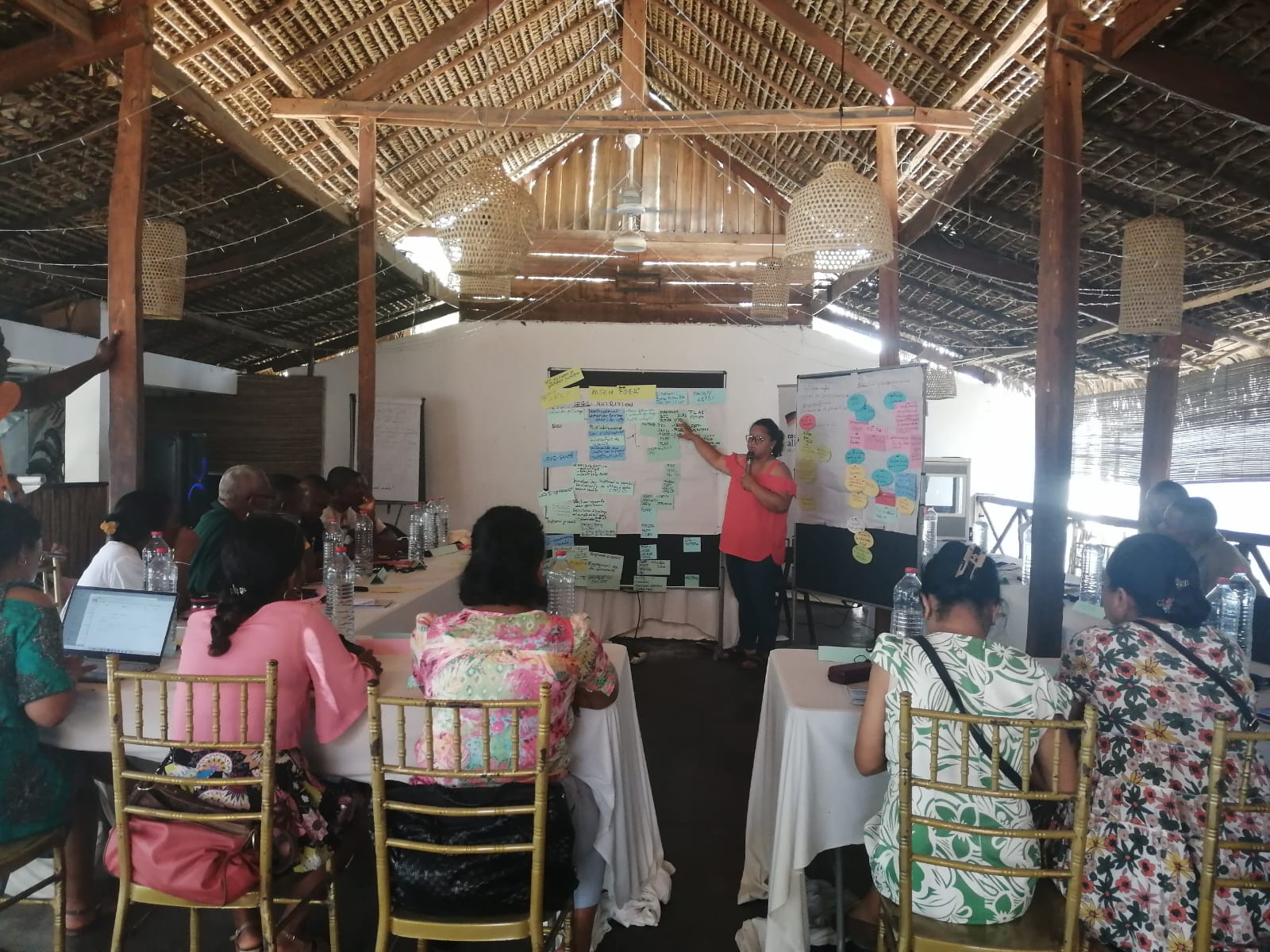
On the final day, participants turned their attention from understanding the approach to determining how it could be put into practice. Working in groups, they examined how Herding for Health could complement the Soil Matters project, strengthen existing field activities and contribute to relevant public policies and development programmes.
The discussions identified clear connections between Herding for Health and ongoing work on soil health, sustainable land management, biodiversity conservation, climate resilience and community governance.
Participants also began developing a joint Ministries–IKI–Soil Matters roadmap outlining priority actions, institutional responsibilities and the next steps required for the gradual introduction of Herding for Health in the Boeny and Atsimo Andrefana regions.
The workshop supported the knowledge-management and capacity-development component of IKI Growing Greener. Through its regional coordination role, CCARDESA will help document and share emerging lessons to inform sustainable rangeland management in Madagascar and across the wider SADC region.
By the end of the three days, Herding for Health had moved beyond a presentation on a screen. Participants had seen the forage, walked the grazing land, listened to community managers and begun identifying how government institutions and development partners could work together.
The journey toward implementing Herding for Health in Madagascar is only beginning, but the Boeny workshop provided something essential: a starting point grounded in local experience, existing achievements, and a shared commitment to healthier livestock, restored rangelands, and more resilient communities.
The IKI Growing Greener programme is funded by the German Federal Ministry for the Environment, Climate Action, Nature Conservation and Nuclear Safety through the International Climate Initiative (IKI). Its consortium partners are GIZ, CCARDESA, Peace Parks Foundation and Conservation South Africa.
https://www.ccardesa.org/ccardesa-herding-health-h4h-knowledge-manageme…