
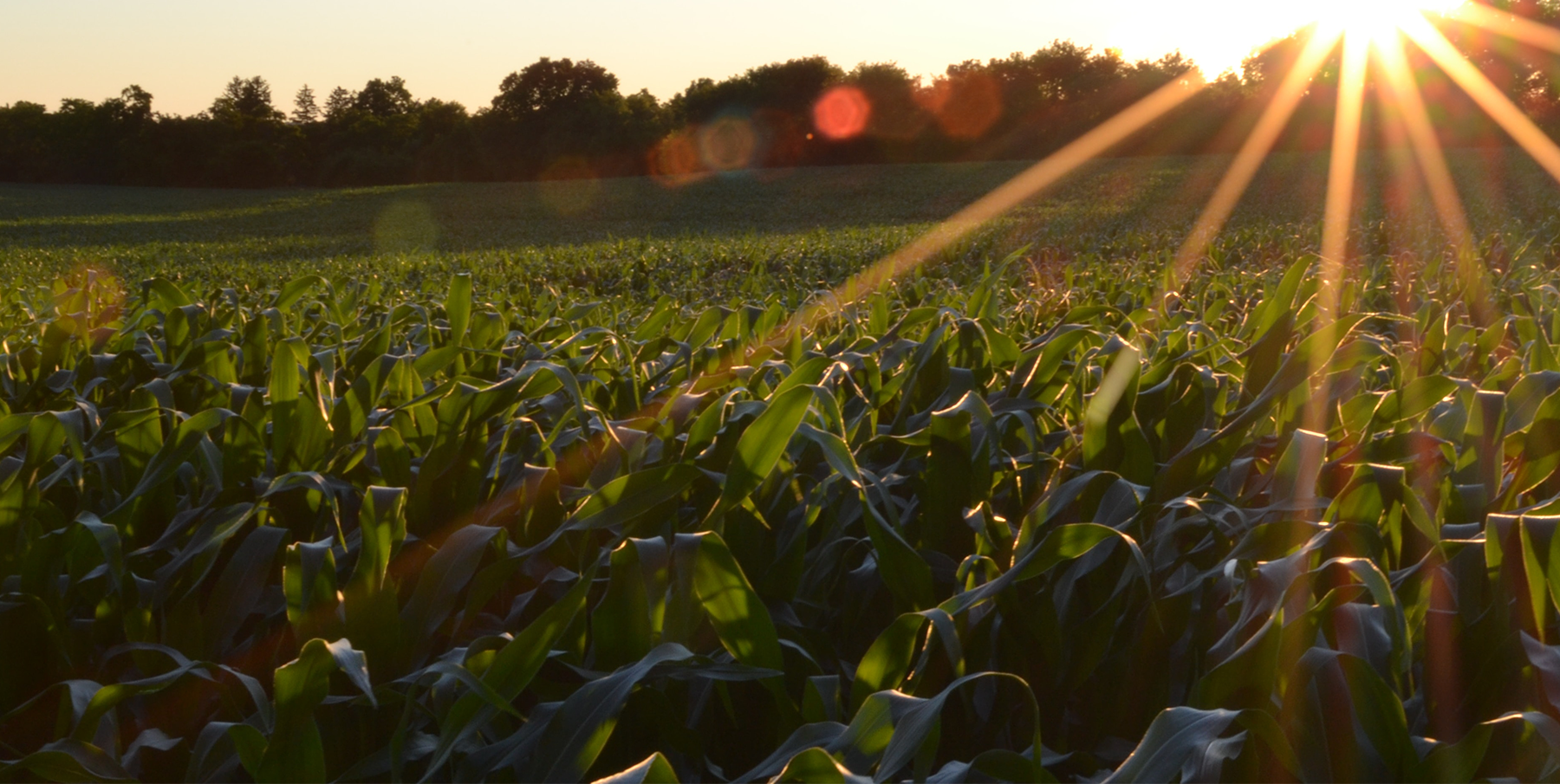
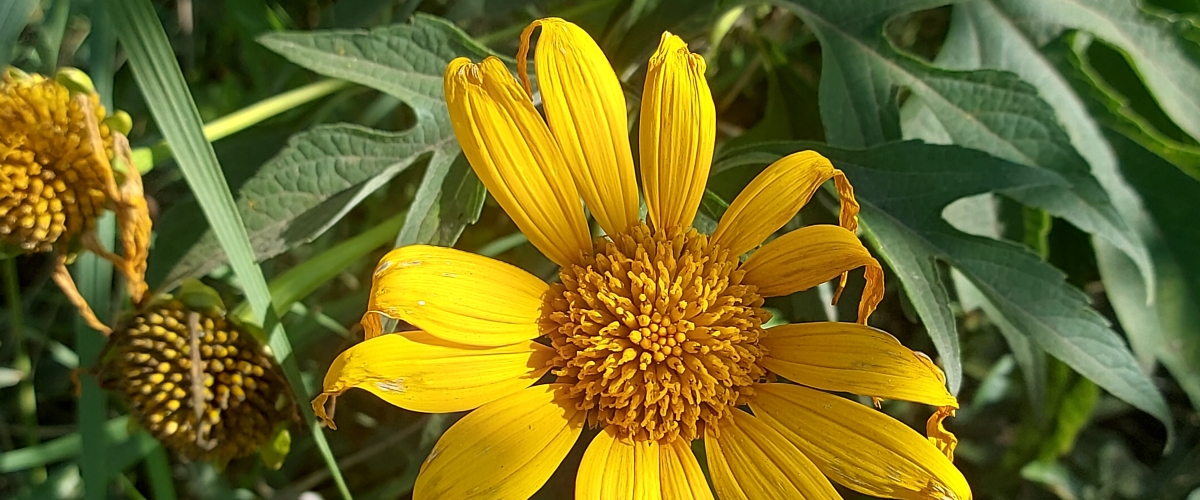
The rolling hills of Malkerns are currently ablaze with a brilliant, deceptive gold. To an outsider driving through Eswatini during the month of June -July, the dense walls of vibrant yellow blossoms lining the roadsides looked like a celebration of mid-winter colour. But to the farmers of the kingdom, those yellow flowers represent the aggressive face of an advancing enemy. The Mexican Sunflower (Tithonia diversifolia) has become a green plague. Spreading aggressively across grasslands, choking riverbanks, and dominating roadsides, it didn’t just occupy space but it colonized it. With its massive leafy canopy and rapid growth, it ruthlessly suppresses native vegetation, leaving livestock with fewer pastures and farmers with choked, unusable land. Every June and July, its blooming season was a stark reminder of a losing battle. But at Umdoni Farm, they saw the golden invasion differently. Where others saw a stubborn weed, they saw an untapped goldmine.
The Turning Point at Umdoni
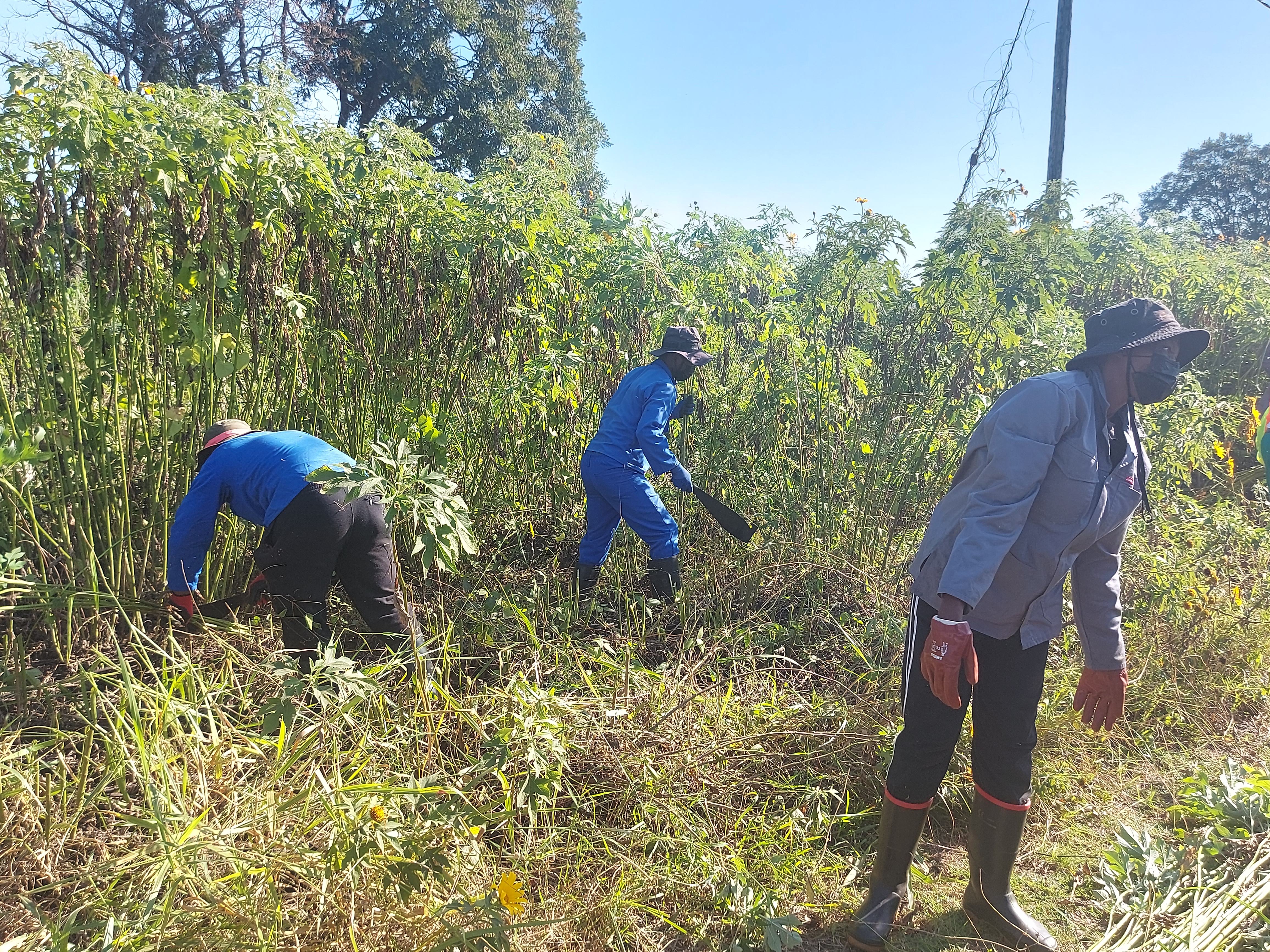
The philosophy at Umdoni Farm was simple: if you can't beat it, commercialize it. They realized that the very traits that made the Mexican Sunflower an aggressive invader, its rapid absorption of soil nutrients and explosive biomass growth also made it a powerhouse of organic matter. Instead of spending thousands of Emalangeni on chemical eradication, the farm mobilized harvesting teams. Armed with machetes, teams began clearing the roadsides and encroaching thickets, turning a conservation crisis into a local employment opportunity.
From Weed to Product
Umdoni Farm succeeded by breaking the sunflower down into two high-value agricultural inputs:
High-Nitrogen Organic Compost
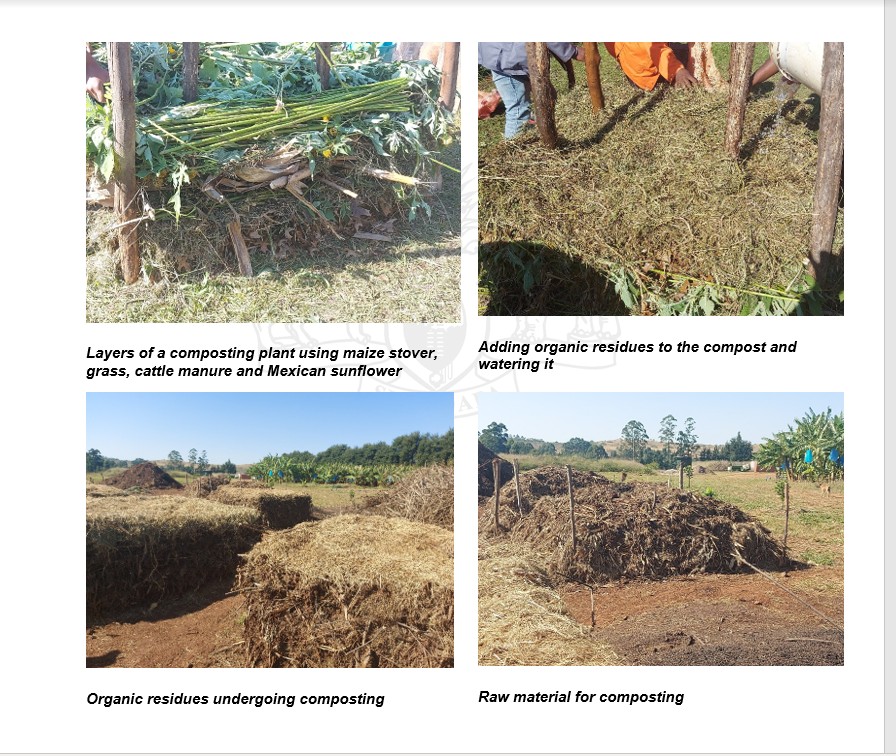
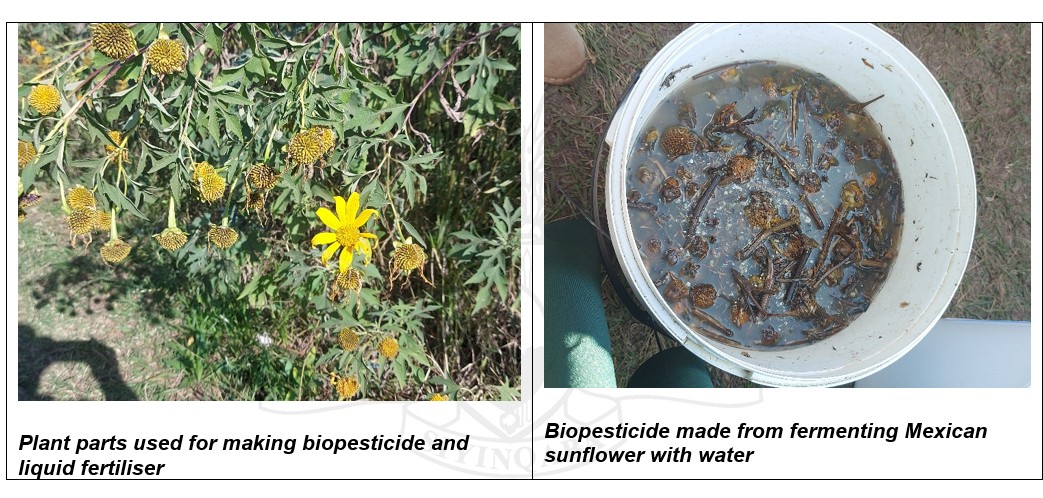
Most weeds are difficult to compost because they lack the nutrient density to break down effectively without a massive addition of animal manure. The Mexican Sunflower, however, is a rare botanical exception. It is exceptionally rich in nitrogen, phosphorus, and potassium (NPK) often carrying nutrient levels that rival commercial green manures. Umdoni developed a systematic layering process, chopping the thick stalks and rich yellow flowers to create premium compost. The resulting organic fertilizer drastically improved soil structure, enhanced moisture retention, and provided a steady release of nutrients for high-yield crop production, heavily cutting the farm's reliance on expensive synthetic fertilizers.
The Botanical Biopesticide
The sunflower's natural defense mechanism is what allows it to suppress other plants and ward off insects in the wild. Umdoni’s research led to the development of a liquid extract from the leaves. By fermenting the crushed foliage, they created a potent, cost-effective biopesticide. Sprayed onto vulnerable crops, this natural formulation effectively controlled common field pests without leaving harmful chemical residues in the soil or on the food.
"No Longer a Weed, But Money"
Today, the atmosphere at Umdoni Farm during June and July is one of bustling harvest rather than anxiety. The mid-winter bloom no longer signals the spread of a devastating invader, but the arrival of peak production season. By closing the loop and looking at an ecological threat through a circular economy lens, the farm has set a powerful example for climate-smart agriculture in the region. The invasive fields are shrinking, the soil health is rising, and the input costs are dropping. Across the community, the old complaints about the stubborn yellow bush have shifted to a new realization. Out here, the Mexican Sunflower is no longer a weed. It’s money.
The author is a Research Officer at the Department of Agricultural Research and Specialist Services, and he is also the CCARDESA ICKM Focal point person in Eswatini