
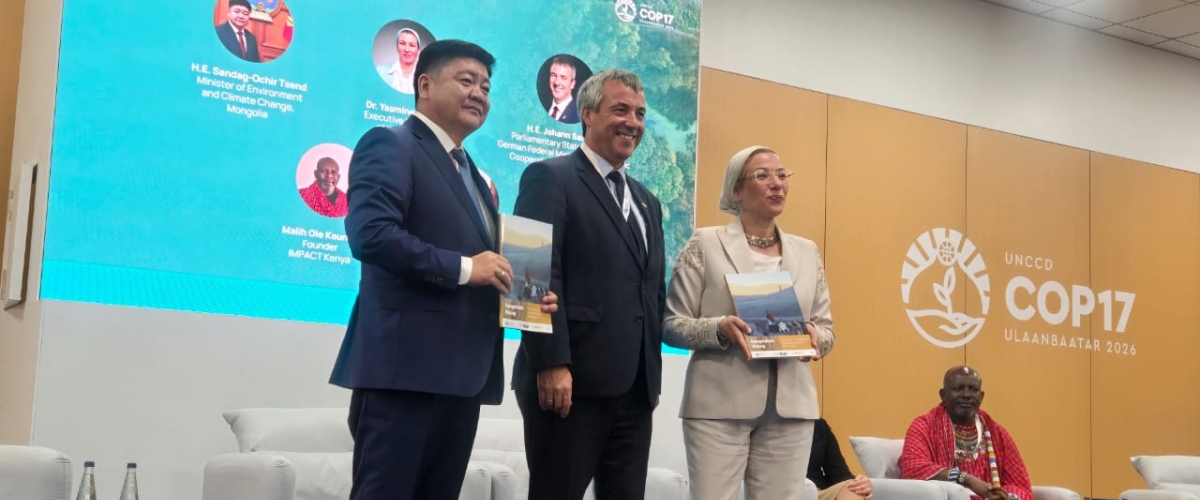
ULAANBAATAR, Mongolia, 24 August 2026 — Mongolia and the United Nations Convention to Combat Desertification launched the Rangelands Flagship Initiative at UNCCD COP17, creating a global platform to increase investment in the sustainable management and restoration of rangelands.
The launch took place during the United Nations International Year of Rangelands and Pastoralists 2026, championed by Mongolia. It brought together governments, pastoralists, financial institutions, scientists and development partners to explore ways of strengthening investment, knowledge-sharing and cooperation. Rangelands cover approximately 54 per cent of the Earth’s land surface and support around two billion people, including about 500 million pastoralists. They provide livestock feed, food, water, biodiversity, carbon storage and livelihoods. However, up to half of the world’s rangelands are degraded or at risk.
The initiative builds on the first UNCCD decision dedicated to rangelands and pastoralists, adopted at COP16 in Riyadh. Mongolia subsequently worked with the UNCCD and other partners to transform that decision into a global programme for coordinated action.
Speaking during the launch, H.E. Sandag-Ochir Tsend, Mongolia’s Minister of Environment and Climate Change, called on governments and partners to support the initiative and ensure that pastoralists remain at the centre of its implementation. A Mongolian proverb shared during the event captured the importance of cooperation: “One piece of firewood cannot make a fire; many pieces are needed.”
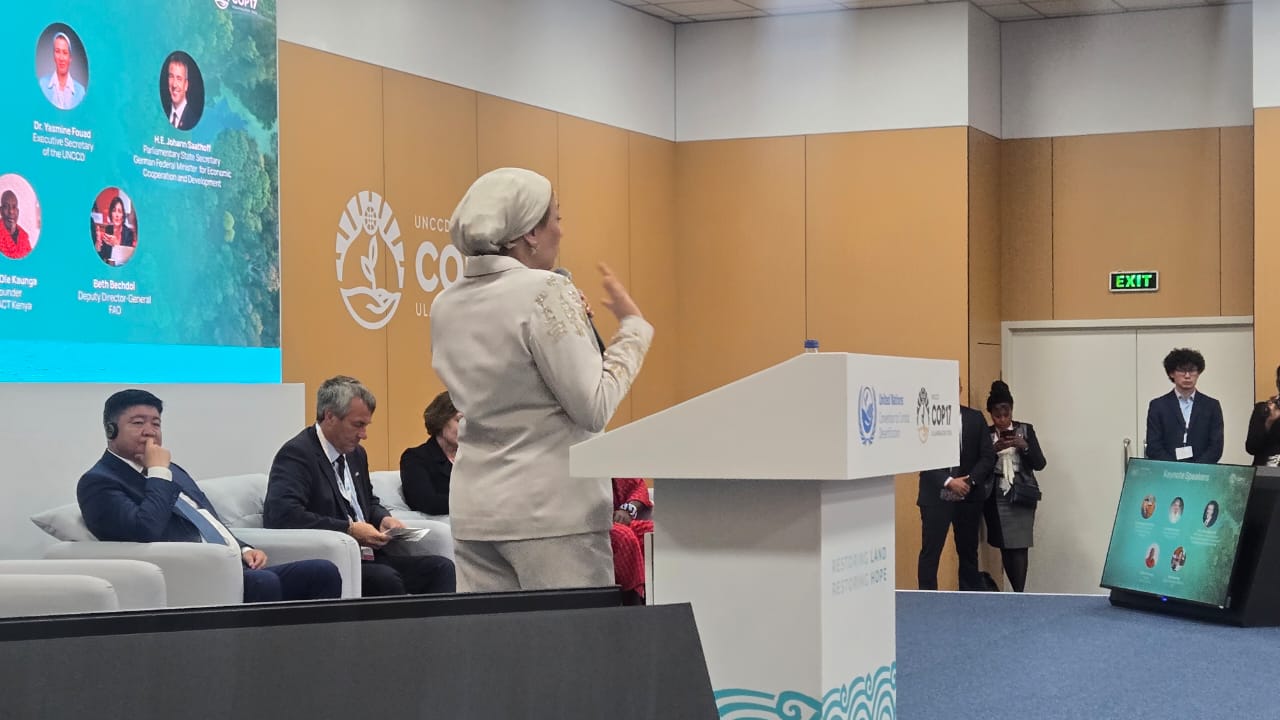
Ms Yasmine Fouad, UNCCD Executive Secretary, emphasised that land connects all people and called for continued and decisive action to restore rangelands and strengthen pastoral livelihoods.
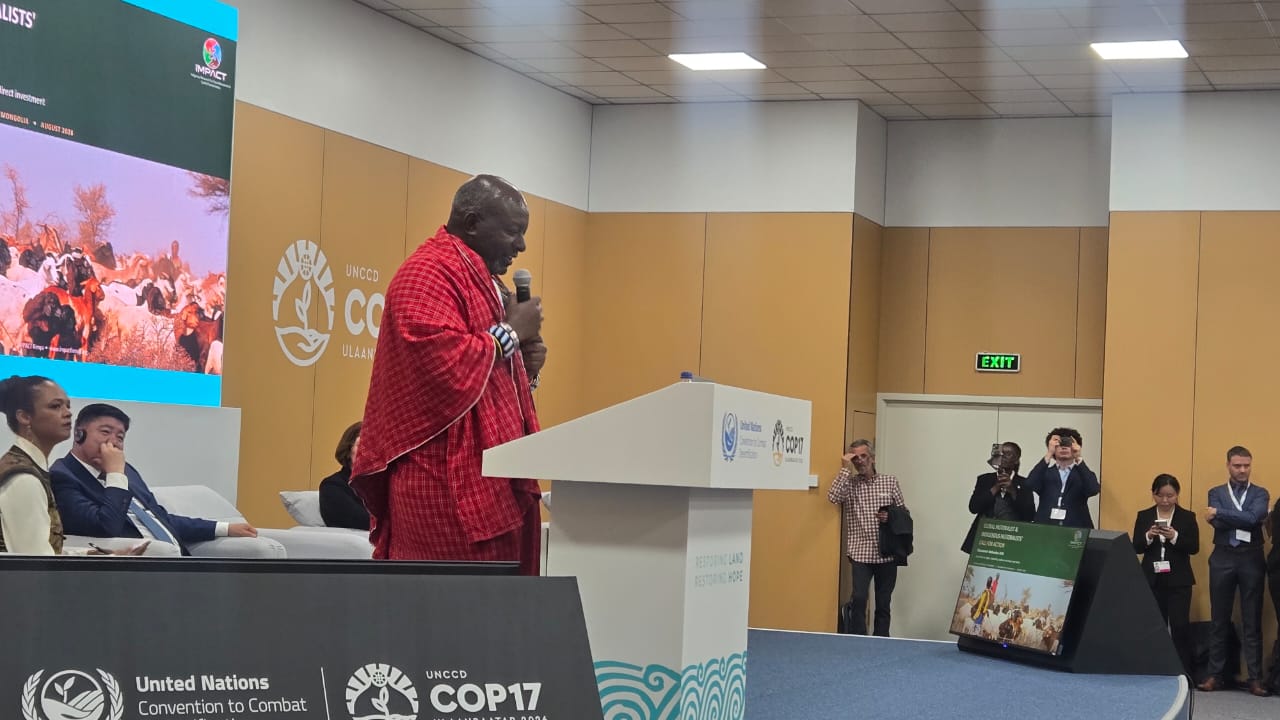
Bringing the discussion back to the people living on the land, a pastoralist representative from Kenya delivered a clear message: “There can be no healthy rangelands without pastoralists.” He explained that pastoralists are not passive beneficiaries but guardians whose mobility, traditional knowledge and daily management sustain these landscapes. He called for secure land rights, stronger markets and direct access to finance, warning that policies and investments will achieve little unless resources reach the people caring for rangelands every day. “The future of food security lies with pastoralists,” he said.
Three interconnected areas of action
The Rangelands Flagship Initiative will focus on knowledge, investment and institutionslaunch banner Under the knowledge component, it will support the development of standards, assessment tools, monitoring systems and knowledge products to help countries understand rangeland conditions and measure restoration results. The investment component will mobilise public and private financing for rangeland restoration, drought resilience, biodiversity conservation, livestock value chains and pastoral livelihoods. The institutional component will strengthen policies, partnerships and national and regional organisations supporting sustainable rangeland management.
The initiative recognises that successful restoration requires more than improving vegetation. It depends on secure land and mobility rights, reliable water, access to livestock markets, strong local institutions and respect for traditional knowledge.
Making the case for investment
The launch was strengthened by the release of Rangelands Rising: Investing in Sustainable Management and Restoration, prepared by the International Livestock Research Institute, GIZ, the Economics of Land Degradation Initiative, UNCCD and IUCN.
The report challenges the perception that rangelands are empty or unproductive. It estimates that they generate between USD 21 trillion and USD 47 trillion in ecosystem services annually. Restoring rangelands can generate returns of between USD 4 and USD 6 for every dollar invested, with even greater returns when benefits such as water security are included.
The report also recognises pastoralists as frontline investors whose knowledge, labour and livestock-management practices have maintained rangelands for generations.
Herding for Health contributes practical experience
The launch is particularly relevant to the Herding for Health Programme, a joint initiative of Conservation International and Peace Parks Foundation, implemented in partnership with governments, communities and other organisations.
Herding for Health was among the partners consulted by the UNCCD during the development of the Rangelands Flagship Initiative. It provides practical evidence of how community-led rangeland management can restore ecosystems while improving livestock production and rural livelihoods.

The programme is based on four interconnected pillars: healthy rangelands, healthy animals, thriving livelihoods, and good governance and enabling policies. It combines planned grazing, improved animal health, community governance and sustainable market access.
Herding for Health is supporting the restoration and improved management of approximately 1.5 million hectares across seven African countries, involving more than 6,000 livestock farmers and benefiting over 100,000 people.
“Herding for Health is a good example of the kind of ambitious and innovative financing approaches that are needed to ensure responsible investment in the rangelands and equitable outcomes for pastoralists,” said Cathrine Mutambirwa, Programme Coordinator at the Global Mechanism of the UNCCD.
Through its participation in the Flagship Initiative, Herding for Health can share field evidence, contribute to a common results framework and demonstrate a scalable approach that countries can adapt to their landscapes.
For CCARDESA, the initiative creates an opportunity to strengthen regional knowledge exchange and coordination on rangeland restoration in Southern Africa.
Through the IKI Growing Greener Programme, CCARDESA can document and share evidence from Herding for Health sites, support stronger monitoring systems and package community experiences into practical knowledge products and investment cases.

CCARDESA can also connect SADC Member States, pastoralists, researchers, development partners and the private sector, helping successful approaches influence policy and attract investment.
The Rangelands Flagship Initiative gives global recognition to what pastoral communities have demonstrated for generations: restoring rangelands requires working with the people who know, use and manage them. Its success will ultimately be measured by whether investment and technical support reach those communities and produce healthier land, healthier animals and more resilient livelihoods.
The IKI Growing Greener programme is funded by the German Federal Ministry for the Environment, Climate Action, Nature Conservation and Nuclear Safety through the International Climate Initiative (IKI). Its consortium partners are GIZ, CCARDESA, Peace Parks Foundation and Conservation South Africa.